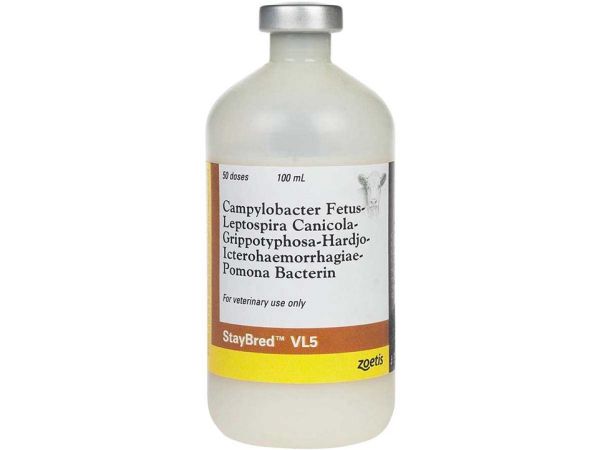
StayBred VL5 aids in the prevention of diseases caused by Campylobacter fetus and the five Leptospira serovars. Campylobacteriosis (vibriosis) and leptospirosis are two of the most important reproductive diseases affecting adult cattle.1 These diseases can be difficult to detect and vaccination is the most cost-effective method of controlling them.
StayBred VL5 aids in the prevention of diseases caused by Campylobacter fetus and the five Leptospira serovars. Campylobacteriosis (vibriosis) and leptospirosis are two of the most important reproductive diseases affecting adult cattle.1 These diseases can be difficult to detect and vaccination is the most cost-effective method of controlling them.
Safety and Efficacy
Because the fractions of StayBred VL5 are inactivated, they cannot replicate in vaccinated animals. Vaccine fractions stimulated satisfactory geometric mean antibody titers for protection. In safety studies of the StayBred VL5 fractions, no adverse reactions to vaccination were reported. Efficacy of each fraction of StayBred VL5 was demonstrated in challenge-of-immunity tests. Cattle vaccinated with any fraction of StayBred VL5, followed by challenge with a disease-causing strain of that fraction, showed no clinical signs or had significantly fewer signs than nonvaccinated control cattle. Serologic studies also demonstrated no immunologic interference among the fractions of StayBred VL5.
Dosage:
Intramuscular (IM) dose is 2mL followed by a second dose two to four weeks later given to all breeding-age cows and heifers 30 to 60 days before exposure or being added to the breeding herd.
Annual revaccination with a single dose is recommended.
Occasional hypersensitivity reactions may occur up to 18 hours post-vaccination. Owners should be advised to observe animals during this period. While this event appears to be rare overall, dairy cattle may be affected more frequently than other cattle.
Precautions
Store at 2°–7°C. Prolonged exposure to higher temperatures may adversely affect potency. Do not freeze.
Use entire contents when first opened.
Sterilized syringes and needles should be used to administer this vaccine.
Do not vaccinate within 21 days before slaughter.
Occasional hypersensitivity reactions may occur up to 18 hours post-vaccination. Owners should be advised to observe animals during this period. While this event appears to be rare overall, dairy cattle may be affected more frequently than other cattle. Animals affected may display excessive salivation, incoordination, and/or dyspnea. Animals displaying such signs should be treated immediately with epinephrine or equivalent. In nonresponsive animals, other modes of treatment should be considered.
As with many vaccines, anaphylaxis may occur after use. Initial antidote of epinephrine is recommended and should be followed with appropriate supportive therapy.
This product has been shown to be efficacious in healthy animals. A protective immune response may not be elicited if animals are incubating an infectious disease, are malnourished or parasitized, are stressed due to shipment or environmental conditions, are otherwise immunocompromised, or the vaccine is not administered in accordance with label directions.



Validate your login